The Art of Planning A Japan Trip: 11 Biggest Mistakes To Avoid

I’m on a mission: make Japan planning feel more custom and authentic.
(and don’t forget to pin this for later!)
I've lived in Japan (on and off) since 2017. And I've learned a lot about what makes this country so special and how to travel it well.
I want to help you plan the best possible trip. Because if you overlook some of these common Japan planning mistakes, it can seriously throw off your whole dang trip.
So let’s skip the chit chat today. Let's do this dang thing!
Hey there, just a heads up some links in this post may be affiliate links, which earn me a small commission. This is at no extra cost to you, but helps me keep the lights on. Thanks for your support!
1. Making Your Itinerary A Generic Highlights Reel
Tokyo has so much to explore beyond the Shibuya Scramble and Sensō-ji (no shade though; those are genuinely cool experiences). But there's even cooler stuff waiting for you if you dig a little deeper.
The key is creating a themed itinerary that actually matches your vibe, travel goals and interests. Are you a foodie? An anime fan? Someone who wants to wander vintage shops and drink coffee in weird little cafes? There's a version of Tokyo for all of use! And each of those experiences will look completely different.
A generic itinerary treats everyone the same. But like, we’re not.
2. Buying A JR Pass When You Don't Need One
The JR Pass is a great deal…if you actually need it.
Grabbing one makes sense if you're planning to travel between multiple cities and you'll be hopping on the Shinkansen (bullet train) regularly. But if you're spending most of your time in one place (like just Tokyo or maybe a trip to Osaka), you probably don't need it. An IC card (like the Welcome Suica) is enough.
After mapping out your itinerary, use a JR Pass calculator to figure out if it's actually worth the cost. It's a simple step that could save you a few hundred bucks.
3. Playing It Too Safe
I am HERE for slow travel and indulgent, guilt-free getaways. They've earned their place.
Buuuuut, travel is also an opportunity to push your comfort zones a little. And Japan is honestly one of the best places in the world to try things you typically wouldn't. It's safe, the people are incredible and if you ever get lost, you’re usually less than 10 minutes away from a train station (in Tokyo).
Here’s my point: why fly thousands of miles away and not try something different? Especially if you're staying in a resort or only doing group tours the whole time.
I'm not saying you need to be in a constant state of discomfort (lol). But why not try that weird menu item? (like horumon (ホルモン)). Or bother the local expat at the izakaya with some small talk. Wander down an alley that looks interesting. Some of the best memories from Japan come from those unplanned moments.
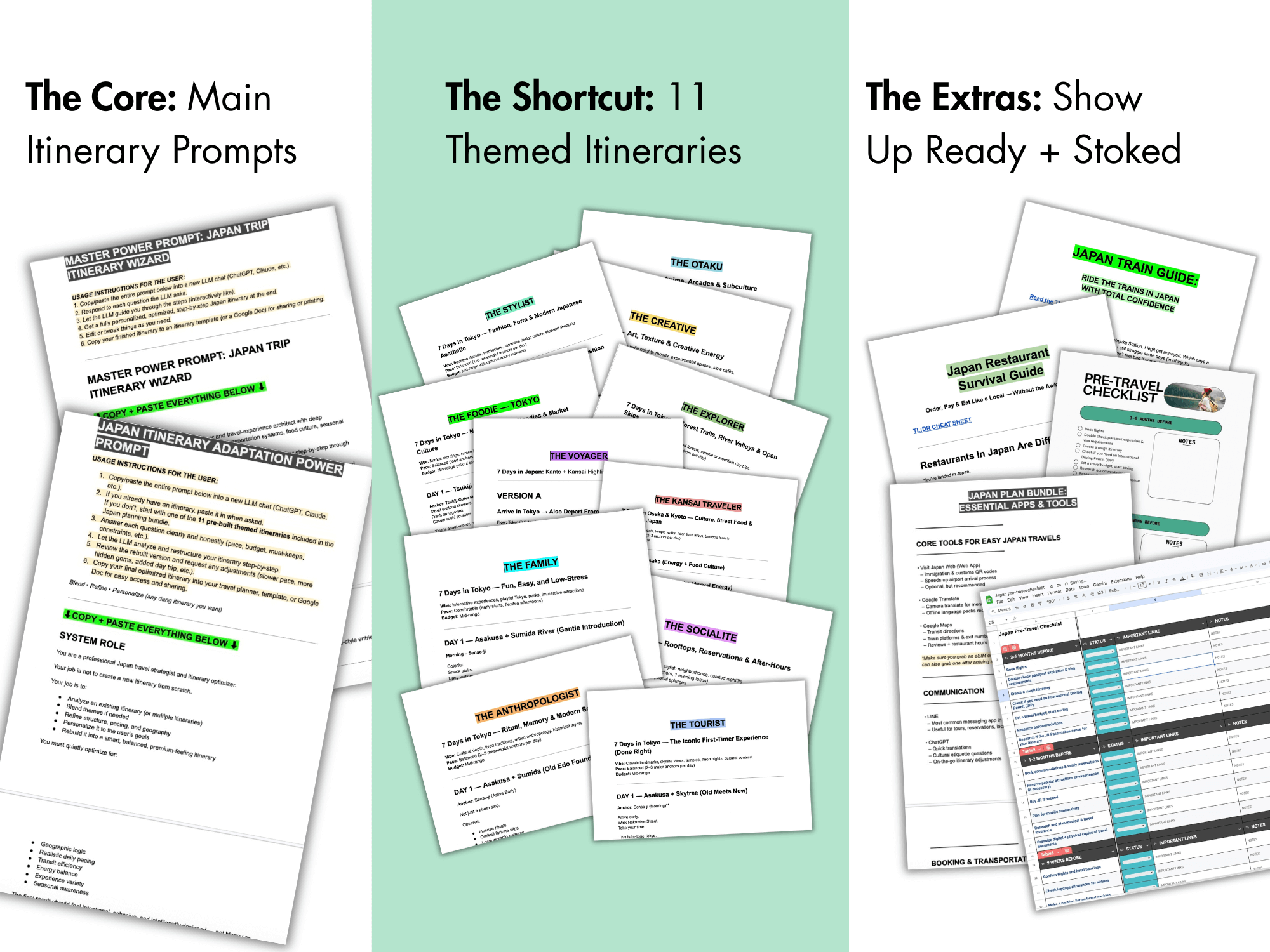
By the way, my Japan itinerary prompts are BUILT for this type of stuff. Create a fully optimized customizable plan in minutes (without or without the discomfort lol).
Click the image to learn more.
4. Not Planning for Connectivity
It's so easy to get reliable internet in Japan these days. There's really no excuse to show up without some sweet sweet data.
Yea, there are WiFi spots around Tokyo. But they're patchy and unreliable…usually right when you need them most too (like getting lost in Shinjuku station at midnight).
Sort your connectivity before you leave. Here are your best options:
Airalo: affordable eSIMs you can set up before you even board the plane
Mobal eSIM card: buy online and have it waiting for you
International plan: add one to your existing phone plan (check if your carrier has a Japan option)
Any of these works. Just don't leave this one to chance.
Explore more:
➤ Tokyo Travel Guide: Core Tips to Know
5. Cramming Too Much Into One Day (or one trip)
Tokyo is massive. Japan is massive. And it takes longer to get places and do things than most first-timers expect.
If your itinerary is stacked with 3+ big ticket experiences every single day, be ready to either pivot constantly or hit serious burnout by day 4. I've seen it happen a lot.
The fix is simple: make a shortlist of non-negotiable things (your tier 1 priorities). Then build out a tier 2 and tier 3 list for when you have extra time or energy.
This way you always have a plan, but it’s flexible.
My Japan Itinerary Bundle is specifically designed to avoid overplanning. It builds days around realistic capacity and energy management, so you actually enjoy the trip instead of just surviving it.
6. Not Grabbing An IC Train Card
The Welcome Suica is one of the best things about traveling in Japan and a lot of first-timers either don't know about it or forget to grab one.
It's a prepaid IC card that works like a debit card for trains, buses, convenience stores, vending machines and more. You just tap in and tap out. No buying individual tickets every time, no fumbling with change (then again, it’s Japan…fumbling with change will happen at some point).
You can pick up an IC up at Haneda or Narita airport when you arrive. Do it first thing so you can easily hop on the train straight away (or take the bus from the airport, it’s cheap and a peaceful ride with a guaranteed seat, plus no train confusion with big bags——worth it if you’re traveling far from Narita).
7. Skipping the Core Etiquette
Japan is known for its politeness and culture. And one of the best things you can do as a visitor is respect that.
The good news is most of it is common sense stuff. Don't talk loudly on trains. Don't eat while walking. Take your shoes off when entering homes. Queue properly. These small things go a long way.
A few phrases help too. Sumimasen (excuse me) is your best friend. Arigatou gozaimasu (thank you) will get you genuine smiles everywhere you go.
You don't need to be perfect. Just aware and respectful. That's enough.
8. Building A Super Strict Itinerary
Okay so I am HERE for spontaneous travel. It’s my default. But there's a difference between having no plan and having a flexible one.
This is part of what I call the anti-itinerary philosophy. Instead of scheduling every hour of every day, you set a loose vibe or theme for each day. "Today is a slow food day" or "Today I want to get lost somewhere new”. Just have a shortlist of vetted experiences ready to draw from.
When it's raining, you have indoor options. When you have energy, you have the longer hike on deck. When you just want to wander, you know which neighborhoods reward that.
Even better, have a travel project. A reason to explore beyond just ticking boxes. Photography, journaling, trying a different ramen shop every day, hunting for vintage finds. Something that makes the trip feel like yours. Travel with a purpose hits different.
The best Japan trips aren't the most scheduled ones. They're the ones with just enough structure to feel free.
9. Not Batching Activities Based On Geography
This one quietly ruins a lot of itineraries and people don't realize it until they're exhausted.
Tokyo is huge. If your day has you bouncing from Asakusa to Shimokitazawa to Odaiba and back to Shinjuku, you're going to spend half your day on trains and arrive everywhere slightly frazzled.
The fix: cluster your activities by neighborhood. Spend a morning in one area, afternoon in the next, and make sure they're geographically logical. This saves time, saves train fare and keeps your energy up for the stuff that actually matters.
A well-structured itinerary flows in a direction. It doesn't zigzag across the city and back.
10. Not Getting Travel Insurance
Japan is incredibly safe. But things still happen (missed flights, lost luggage, sudden illness, the occasional earthquake…).
Travel insurance in Japan is one of those things that feels unnecessary until you really need it. And then you're very, very glad you have it.
I use SafetyWing. It's affordable (around $56/month), works like a subscription you can turn on and off, and covers the essentials——medical emergencies, trip interruptions, lost baggage and more. You can even sign up after you've already left home.
Just get it. Peace of mind is worth more than whatever you'd save skipping it.
11. Not Using Modern Tools
The old school way of travel planning is dead.
That means no more sifting through 19 open browser tabs, rabbit-holing down YouTube videos for hours and then trying to stitch together a plan that hopefully feels like you…and is hopefully structured well too.
AI has genuinely changed trip planning. Not the generic "write me a 10-day Japan itinerary" ChatGPT prompt (that gives you the Wikipedia version of Japan). But a well-engineered prompt that asks the right questions first (your travel style, interests, budget, cities, pace) and then builds something that actually fits you.
That's exactly what the Japan Itinerary Builder is. A premium AI prompt built by someone who has actually lived in Tokyo. Drop it into ChatGPT or Claude, answer a few questions, get a fully personalized day-by-day Japan itinerary in minutes.
It also comes with 11 done-for-you themed itineraries if you'd rather start from something pre-built and customize from there——PLUS a train guide, restaurant survival guide and pre-travel checklist. All the planning. None of the overwhelm.
(by the way, if you just want the pre-travel checklist, grab that for free here)
Alright, that's a wrap. Avoid these mistakes and you're already ahead of 90% of first-time Japan travelers.
Now go plan something worth remembering.
Later ✌️
Want more? Nice. Here’s more.